

Overview
The customer came to us with an interesting challenge. They were in the process of transforming certain floors into open-plan spaces, but the lift opened right into the middle of these areas, creating a potential security nightmare. The goal was clear: keep unauthorized individuals from not only sneaking through the doors but also from getting onto the floor via the lift.
We needed to look at Lift Access Control – essentially a way of locking down the lift buttons unless the person using it has the right credentials. Think of it like a VIP-only access pass for each floor. With more advanced lift systems, this is usually achieved through a digital link to the lift control panel. For the more basic setups, it’s often a straightforward physical connection.
In designing this system, we’d make sure that only those with the proper access could even reach the floor they’re trying to get to. So, no more concern about unauthorized visitors out of the lift on a floor they shouldn’t be on. They wanted a seamless, security-enhancing solution that ensures access is controlled, even when the lift is part of the equation. And as multiple floors became more open and modern, they needed a system that would evolve right along with them.
The initial discussions
At the core of our approach is a strong focus on consultancy. We don’t just offer quick fixes – we dive deep into understanding our customers’ needs. It’s all about grasping their current goals, future plans, and budget constraints. From there, we craft solutions that are custom-built to seamlessly meet those requirements, ensuring everything is aligned perfectly.
When we were presented with this particular challenge, we took a step back and thought about the simplest and most cost-effective way to solve it. After discussing several potential solutions with the customer, we explored the idea of a PIN-based access control system. The idea was simple: a PIN number reader at each floor requiring access. Once users entered the correct code, the lift buttons would be activated, granting access to specific floors. Sounds straightforward, right?
Well, as we dug deeper into the details with the customer, we realized that the PIN-based approach wasn’t flexible enough for their evolving needs. The customer wanted a system that allowed them to easily revoke or regrant access as business and tenant requirements shifted. Constantly changing the PIN and redistributing it to everyone would quickly become a logistical nightmare. And with plans to open more floors in the future, they’d need to install multiple PIN pads across various floors. This would just add complexity and cost, especially as their space continued to grow.
Another crucial factor was the need for auditability. A shared PIN would make it impossible to track exactly who accessed the lift or any particular floor, which was important for security and operational efficiency. The customer needed full visibility into who was using the system at all times.
Next, we discussed whether to restrict lift access when users were leaving a floor. Should the system prevent unauthorized individuals from calling the lift from a floor they shouldn’t be on? The customer felt that wasn’t necessary. Once someone was granted access to a floor, tracking when they left wasn’t a priority for their business.
As we continued to investigate, we discovered that the customer already had a Paxton NET2 system in place for their main entry and exit doors. They were also using key fobs for all building users, and the building manager was already comfortable with issuing, revoking, and managing these fobs. This gave us a major clue: integrating the keyfob system with the lift access control would make the most sense. This way, the customer could continue using a system they were familiar with, making management simpler and reducing the need for a complicated new setup.
After all the conversations and considerations, we determined that the best solution was to stick with a Paxton NET2-based system and add a lift reader to the mix. This solution not only integrated perfectly with their existing infrastructure but also provided the flexibility they needed without complicating things. It was simple, cost-effective, and perfectly aligned with their needs.
In the end, we created a seamless, scalable solution that was easy to manage and enhanced security across the building. The customer got a system that grew with their business, providing secure access control without breaking the bank. This solution checked all the boxes and proved to be the perfect fit for their current and future requirements.
Designing & Implementing a Solution
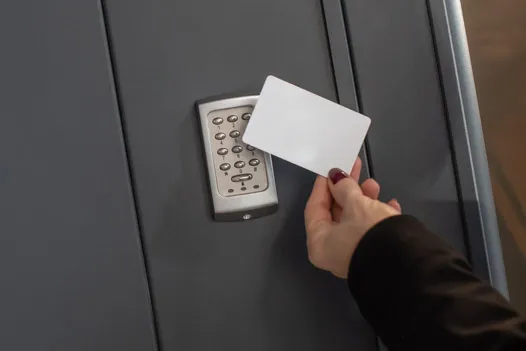
When it comes to Paxton NET2, we think of a lift as just another door. But making it work seamlessly requires a little extra thought and creativity. In this case, we added a door controller in the lift’s control room, paired with a key fob reader inside the lift itself, while interfacing the Paxton system with the lift’s floor buttons. Simple, right? Well, there was a little more to it than that.
Now, let’s be clear—we’re not lift engineers. We’re an IT company, and while we’re experts in access control and security, when it comes to safely moving people up and down in a box, we leave that to the professionals. So, we partnered with the customer’s existing lift maintenance company to ensure everything was up to code. The lift experts checked our design for compliance with the Lift Regulations 2016 and all relevant legislation, making sure that everything was not only safe but also insurance-compliant. They also took care of the heavy lifting—literally—by running the necessary cables in the lift shaft and providing the proper interfaces.
The customer had a clear vision: one key fob reader for everyone, but the ability to control which floor buttons would be active depending on the user’s permissions. The challenge? A standard Paxton NET2 Door Controller is designed to handle a single door, so it didn’t quite fit the bill for managing multiple floors. Enter the Paxton NET2 IO Board—the perfect solution! This clever board could be connected directly to each lift button, giving us the ability to control each button individually.
With the NET2 IO Board in place, we were able to create a custom system of Triggers & Actions. This meant that, based on a user’s key fob, the floor buttons would become active or inactive depending on their permissions. For example, one user might have access to one floor in the morning and a different one in the afternoon—flexible and secure! This level of granularity allowed us to create a tailored solution that fit the customer’s needs perfectly.
Once everything was in place, we teamed up with the lift company’s engineer to install the equipment on-site. But we didn’t stop there. We also migrated the customer’s existing NET2 Server to our secure cloud environment, which not only ensured better security but also streamlined management. As the customer expanded their business, we made sure the access control system scaled with them, so a single key fob could be used to access multiple locations, all managed under one cohesive system.
Finally, we trained the building manager on how to set up the Triggers & Actions in NET2, configure which floors each user had access to, and manage everything efficiently. This empowered the customer with full control over their system, ensuring it met their current and future needs.
In the end, we delivered a robust, flexible, and cost-effective solution that integrated perfectly with their existing infrastructure, making their lift access control as easy and secure as the rest of their building’s security. And the best part? It’s all manageable from the cloud, so they can grow and adapt without missing a beat.

Follow Up
The end result? One very happy customer and a group of satisfied tenants. Not only did they feel secure with the upgraded system, but it didn’t break the bank either. But we didn’t stop there—we took things a step further by integrating even more smart technology using Net2’s Triggers & Actions. For example, when a user accesses a particular floor, we can trigger the lights and air conditioning to automatically turn on. We made this possible through an API request to the relevant devices, which meant no additional cabling or physical installation was required. Plus, everything was done remotely, saving the customer even more money.
Looking ahead, we know that if the lift’s control board is upgraded to a smarter model in the future, we’ll be able to remove the Net2 IO Board and connect directly to the lift using API requests. Had this option been available at the start, it would have significantly reduced costs right out of the gate.
We also briefly explored the possibility of switching to Paxton10 or other alternatives like Ubiquiti UniFi Access. These solutions would allow users to unlock doors and access the lift with their smartphones or smartwatches, eliminating the need for physical keyfobs. While it sounds cool, this would require replacing the entire NET2 system, which would be a big investment for the customer. However, it’s something they may choose to do down the road as their business expands.
In the end, we were able to deliver a flexible, cost-effective solution that not only meets the customer’s needs today but also lays the groundwork for future upgrades. The ability to scale and integrate smart technology while keeping costs down makes this solution a win all around!

